Automated Client Workflow
Connect conditional intake forms to automated PDF generation, delivery, and integrations — an end-to-end client workflow built on the rules you set.
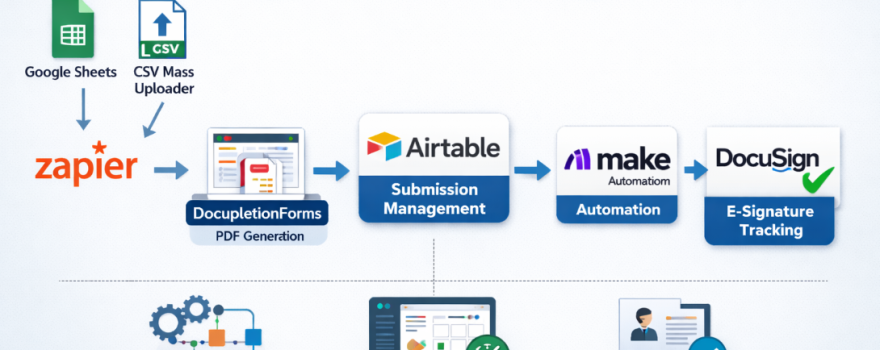
Google Sheets (or CSV uploader), Zapier, DocupletionForms Data-Merge PDF, AirTable, Make, DocuSign!
The DocupletionForms Integration Architecture outlines a structured, end-to-end workflow that connects Google Sheets, Zapier, DocupletionForms, and more.
Read more »
How to Turn a Fillable PDF into a Question-Based Intake Form
How to use a PDF intake encoding SOP to turn any fillable PDF into a guided, question-based intake form.
Read more »
Checking PDF Checkboxes via Multiple Conditions!
THIS IS HUGE! Checkboxes have been historically difficult! Our new release inside of DocupletionForms.com solves it.
Read more »
Simplifying Document Automation: Powerful, No-Code Tools for Your Workflow
If you’re looking for a streamlined way to create and manage documents without needing to code, this is for you.
Read more »The building blocks of an automated client workflow
Conditional Intake Forms
Build dynamic, multi-step intake forms that adapt in real time based on how users answer each question. Instead of a long static questionnaire, forms guide users through a logical decision path. By applying conditional logic rules, irrelevant fields are hidden automatically, reducing fatigue and preventing inaccurate submissions. For complex branching, advanced logic is documented in the Rule Builder guide.
PDF Document Automation & Data-Merge
Once form data is collected, it maps directly to PDF templates so documents are generated automatically — no manual copy-and-paste. Get started with the Data-Merge Basic Instructions, while advanced use cases like conditional field population and multi-template workflows are covered in the GitBook data-merge documentation.
Checkbox & Conditional Field Triggers
Form checkboxes can be synchronized directly with checkbox fields inside generated PDFs — ideal for agreements, compliance checklists, elections, and option-based disclosures. The setup is explained in the Checkboxes on Form Trigger Checkboxes on PDF walkthrough, with deeper reference in the GitBook reference.
Automated Email Delivery
Completed documents can be delivered instantly to clients, internal teams, or external partners upon submission — no manual attachments or follow-up emails. Delivery rules, recipients, and message templates are controlled with the confirmation and notification instructions.
Zapier & App Integrations
Connect form submissions to thousands of external applications including Google Sheets, Slack, CRMs, and email platforms. Basic integrations use the Zapier setup guides, while advanced scenarios such as PDF-driven triggers are documented in the Zapier PDF merge documentation.
Webhooks & External System Routing
For custom integrations, submission data can be sent directly to external systems via webhooks — CRM ingestion, database storage, or server-side processing via PHP or MySQL. Examples are in the webhook instructions, with architectural guidance in the GitBook Webhooks Add-on documentation.
URL Forwarding & Data Appends
After submission, users can be redirected to another page while selected form values are passed securely via URL parameters — common for custom dashboards, portals, or third-party handoffs. Configuration steps are in the Append Data to a URL Forward guide.
QR-Code Enabled Form Access
Generate QR codes for instant access to forms in physical locations or printed materials — useful for events, offices, job sites, or mobile-first workflows. See the QR Code for Contact Forms guide.
Enterprise Roles & Organization Management
Manage access control and workflow ownership across teams and departments with role-based permissions, keeping sensitive data and admin controls limited to authorized users. See the Enterprise Subscription Organization Roles overview, expanded in the GitBook enterprise documentation.
Turn Any Fillable PDF into a Question-Based Workflow
This guide walks you through taking a traditional fillable PDF and transforming it into a dynamic, question-based intake form that feels conversational and user-friendly. It explains why converting static PDFs into interactive question sequences streamlines data collection, reduces friction for respondents, and improves completion rates. Whether you’re onboarding clients, collecting applications, or gathering information, the post shows how a more guided intake experience boosts both efficiency and accuracy.
